


|
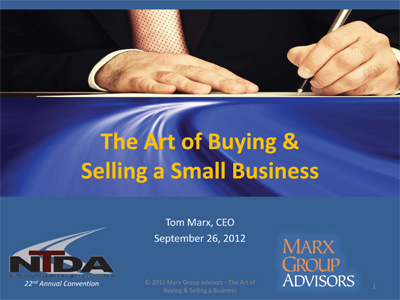
PERA 2013: ASPECTS OF BUYING/SELLING A SMALL BUSINESS
Presented by Tom Marx
In this webinar we will answer many of the common questions people ask about selling and valuing their business, including the necessary paperwork and information needed to get a business ready to go to market, what to look for from a broker or agent, and how deals are structured. We will also look at proven steps to follow to increase the chance of closing the sale of a business.
|

Public speaking engagements are a meaningful way for advisory professionals to share practical insight with business owners who are weighing a major transition. A well-structured presentation can walk attendees through the early questions that tend to surface when a founder begins to consider an exit, including how to think about timing, market readiness, and the role that independent guidance plays in protecting shareholder interests. Audiences benefit most when the conversation is grounded in real scenarios rather than abstract theory, and when presenters are willing to address the concerns that owners rarely voice in formal settings.
Selling a business is rarely a single decision; it is a sequence of preparation steps that begins long before a listing is signed. Speakers in this space often emphasize the importance of organizing financial records, cleaning up recurring discrepancies, and presenting a coherent picture of operations to anyone who might later sit across the negotiating table. Equally important is the discipline of separating personal expenses from business performance, since buyers and their representatives will scrutinize every line item. Owners who prepare early tend to experience fewer surprises once the formal process begins.
Valuation is another recurring theme in these engagements, and it is often the area where expectations diverge most sharply from reality. Presenters frequently note that owners tend to anchor on a single number, while a defensible valuation is built from a blend of approaches that account for risk, growth trajectory, and the quality of recurring revenue. Helping an audience understand why two qualified advisors can reach different conclusions, and what inputs shape those conclusions, gives owners a framework for evaluating the advice they receive rather than treating any single figure as final.
Deal structure deserves attention alongside headline value, and experienced speakers use engagement sessions to demystify the mechanics of a transaction. Conversations often turn to the difference between asset sales and stock sales, the treatment of working capital, earn-out provisions, and the contingencies that can extend or shorten a closing timeline. When owners understand how terms interact with one another, they are less likely to be surprised by the trade-offs that emerge during negotiation, and more able to recognize when a proposed structure aligns with their broader objectives.
Choosing the right advisor is the thread that ties preparation, valuation, and deal structure together, and it is often the closing message of these presentations. Speakers typically encourage owners to look beyond credentials and to ask pointed questions about process, communication cadence, and how conflicts of interest are managed. A good engagement leaves the audience with a clearer sense of what to expect, what to demand, and where to focus their own attention so that the eventual transaction reflects both their financial goals and the business they have spent a career building.
|
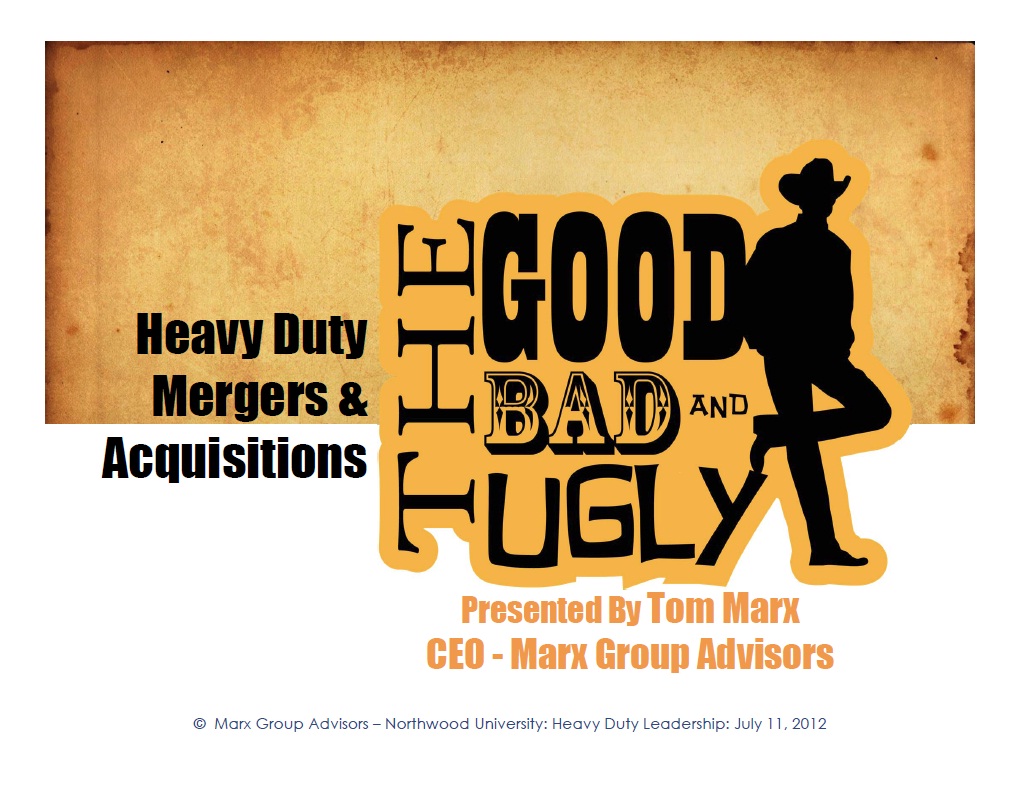
Northwood University 2012: Heavy Duty Mergers & Acquisitions - The Good, The Bad and The UglyPresented by Tom Marx and Paul Cooperstein
|
|
SSA 2011: The Art of Buying and Selling an Aftermarket BusinessPresented by Tom Marx and Paul Cooperstein 70% of all small and mid-sized businesses who are thinking of selling their business don't sell. In order to prepare and follow-through with the right ways to successfully value and sell their business, the following information should be considered:
|